 Edited by
  Edited by

A will, or a last will and testament, is more than just a legal document. It expresses your wishes regarding the distribution of your assets and the care of your minor children after your death. In Texas, the absence of a will leaves your estate subject to state intestacy laws. This may distribute your assets in a way that doesn’t align with your personal wishes or relationships. DIY estate planners in Texas can draft their own will online for less than $100 or even create a handwritten will for free. However, some may opt to work with an attorney, costing upward of $2,000 to have a will created by an expert.
A financial advisor with estate planning expertise can help you plan for when your loved ones inherit your assets. Find a fiduciary advisor today.
What Is a Will and Why Do You Need One?
A will is your written plan for what happens to your assets and your minor children after your death. This is a last will and testament, and the person making the will is the testator.
Having a will is like having a roadmap for your loved ones to follow. It gives explicit instructions on the distribution of your estate. This can help prevent future misunderstandings and disputes.
If you die without a will in Texas, your estate falls under state intestacy laws. 1 These laws simply divide your assets without consideration for your personal relationships or desires.
For example, when there is a surviving spouse and children, not all assets automatically go to your spouse. Instead, they may be split in specific ways. These set rules could result in distributions that are completely opposite to what you would have wanted.
Do I Need an Attorney to Draft a Will in Texas?
In Texas, as in many jurisdictions, individuals can make their own wills without a lawyer. According to the Texas Estates Code, Section 251.051, 2 a will must be in written form. The testator must also sign, unless they appoint another individual to sign in their presence. At least two credible witnesses over the age of 14 must also attest.
This provision affirms the state’s acknowledgment that self-created wills, if they adhere to the specified statutes, are legally enforceable.
However, you don’t even need an online will maker to create a legally-binding will in Texas. The state recognizes handwritten wills, or holographic wills. 3 You do not need to sign these wills in front of witnesses, as is usually required for more formally drafted wills.
However, you must meet several conditions for holographic wills to be legally valid in Texas.
- They must be entirely handwritten and signed by the testator.
- You must date the document.
- The writing must clearly convey the testator’s intention to distribute their property after death.
While holographic wills offer a more informal approach to estate planning, you must meet all legal requirements to ensure their enforceability.
Costs of Creating a Will in Texas
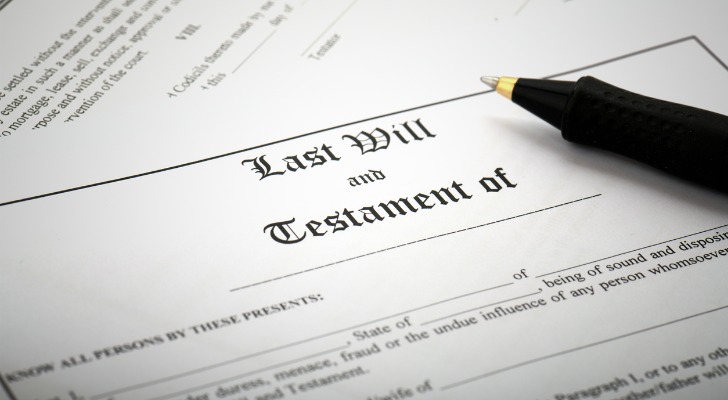
Handwritten wills are free. However, costs for creating other wills in Texas vary based on the method and complexity of the estate. For those with a straightforward will, online platforms like LegalZoom or Quicken WillMaker & Trust can help you create a basic will for less than $200. In contrast, individuals with more elaborate estates may require the services of an attorney, often resulting in a greater financial commitment.
Several factors influence attorney fees, including the lawyer’s expertise, the estate’s complexity and your geographic location. Urban areas like Houston and Dallas may see fees that, while not capped, can reflect the higher cost of living. A more complex will can cost upwards of $2,500.
However, these costs can fluctuate widely, and attorneys in smaller towns may offer more affordable rates.
Requirements for Creating a Will in Texas
To make a valid will in Texas, there are several basic legal requirements, per the Texas Estates Code. 4
- The testator must be at least 18 years of age, be a legally emancipated minor, be married or be serving in the armed forces.
- The testator must be of sound mind, understanding the nature of their property, the potential heirs and the act of making a will.
- The will must be a written document and signed by the testator or directed to be signed by another person in their presence.
- At least two credible witnesses over the age of 14 must observe the testator signing the will or acknowledging their signature. (This requirement doesn’t apply to holographic wills.)
- Witnesses must sign the will themselves, affirming their presence during its execution.
While notarization is not mandatory, it is advisable to notarize a will to make it self-proving, expediting the probate process.
Seeking professional legal advice can also help ensure the will meets all legal requirements and is effective. Lastly, regularly updating your will and consulting with an estate planning expert can provide clarity and peace of mind for the testator and their heirs.
How an Advisor Can Help You Create an Estate Plan for Texas
If you live in Texas and want to create a will or estate plan, guidance can be useful when you are unsure how state-specific rules affect your choices. Texas intestacy laws, community property rules and probate procedures can all shape what happens to your assets without a will.
Creating an estate plan in Texas involves more than deciding who receives your property. You may need to make several key decisions.
- Community property versus separate property
- Beneficiary designations on retirement accounts
- Guardianship for minor children
- Whether probate can be avoided or simplified under Texas law
A financial advisor can help you review your assets to determine their structure under Texas law. This includes assessing property ownership, retirement accounts, insurance policies and existing beneficiary designations. Your advisor can help you identify conflicts or gaps between financial accounts and your will.
There are several questions you can ask.
- Which of my assets are community property?
- How do beneficiary designations interact with a Texas will?
- What happens to my estate if I die without a will in Texas?
- How might probate affect my heirs?
These questions often come up once you begin applying Texas-specific rules to your situation.
An advisor can also help you evaluate timing and tradeoffs. Decisions about lifetime gifts, account ownership changes or updating beneficiaries can affect taxes. It can also affect access to assets and long-term financial security, especially when combined with Texas property laws.
As your life changes, your estate plan may need updates. A financial advisor can help you revisit your Texas estate plan after events like marriage, divorce, buying property or having children. This can keep your planning aligned with both state law and your broader financial goals.
Bottom Line

The cost of creating a will in Texas depends on the complexity of the estate and whether the person chooses to hire an attorney. Attorneys may charge thousands of dollars to handle the process. However, you can also draft a will in Texas using an online service for less than $100. Otherwise, you can create a handwritten or holographic will for free. Just keep in mind that a mistake could invalidate the will and subject your estate to state intestacy laws.
Estate Planning Tips
- If you’re just starting the estate planning process, there are several vital things you’ll need to do, including appointing a guardian for your minor children and taking stock of your assets. But that’s not everything. Here’s an estate planning checklist that can help you jumpstart this all-important process.
- You may also want to work with a financial advisor who offers estate planning services. Finding a financial advisor doesn’t have to be hard. SmartAsset’s free tool matches you with vetted financial advisors who serve your area, and you can have a free introductory call with your advisor matches to decide which one you feel is right for you. If you’re ready to find an advisor who can help you achieve your financial goals, get started now.
Photo credit: ©iStock.com/Davel5957, ©iStock.com/roberthyrons, ©iStock.com/JLco – Julia Amaral