 Written by
  Edited by
  Edited by

If you’ve ever applied for a credit card or completed a job application, you’ve probably been asked for your Social Security number. Issued by the Social Security Administration (SSA), this unique nine-digit number is one of your most important pieces of identifying information. There are various ways to use your Social Security number, and several important reasons you need it. This is a closer look at how they work.
Ask a financial advisor about how to use your Social Security number to set up your financial future.
Social Security Numbers Explained
A Social Security number (SSN) is a unique nine-digit code used to identify you and track your earnings over the course of your lifetime.
These numbers were first introduced in 1935 as a means of tracking earnings histories for U.S. workers. According to the Social Security Administration (SSA), over 548 million Social Security numbers have been issued, as of August 2025, with more than enough numbers left for generations to come.
The Social Security Administration issues Social Security numbers at birth and to eligible legal residents. Your SSN card is a paper card you receive in the mail. It contains three components:
- Area Number: This is the first set of three digits based on your geographic region. It uses the zip code you provided when applying for a Social Security number, so it does not necessarily reflect where you were born or where you live.
- Group Number: The second set of two digits is the group number that corresponds to your area number. It can range from 01 to 99 on an odd/even basis.
- Serial Number: The third set of four digits ranges from 0001 to 9999.
Starting in 2011, the Social Security Administration began randomizing Social Security number assignments. The most notable change is that area numbers no longer have any geographic significance based on where you live.
Social Security Numbers, Social Security Benefits

Social Security numbers were first created to track workers’ earnings to determine what Social Security benefits they are entitled to receive after they retire. It remains a primary function of Social Security numbers today.
Social Security benefits are typically calculated using your average indexed monthly earnings, taking into account up to 35 years of earnings.
For example:
- You get your first job at age 16, and the SSA starts tracking your earnings history from that point.
- Over time, your actual earnings are adjusted or indexed to account for changes in average wages.
- The SSA then uses these adjusted wages to calculate your basic Social Security benefit. This is the amount you receive once you reach full retirement age.
Your full retirement age is based on the year you were born. For those born in 1960 or later, the age is 67.
If you wait until full retirement age to receive benefits, you will receive your full benefit amount at that age. You can technically begin taking Social Security retirement benefits at age 62, but doing so will reduce your benefit amount.
You also have the option to delay taking Social Security benefits up to age 70, which can increase your benefit amount.
Other Uses for Social Security Numbers
Aside from Social Security benefits, there are other ways to use your Social Security number.
A Social Security number is typically necessary to:
- Open a bank account in your name
- Apply for federal or private student loans
- Get a credit card in your name
- Apply for a home mortgage loan or car loan
- Apply for a job
- Qualify for state or federal benefits or financial assistance
- Get a passport
- File your taxes
- Get a driver’s license
You may also need to provide your Social Security number when applying for cell phone or utility services in your name, renting a car or signing a lease on an apartment. This is because Social Security numbers are used for credit scoring.
Your credit score is a three-digit number based on your credit reports. Your lenders and billers report your financial account and payment information to the credit bureaus.
How to Protect Your SSN
One of the key identifiers for credit reporting and scoring is your Social Security number.
Your entire credit history relies on this number, which is why it is so important to protect it. If someone obtains your Social Security number and other pieces of personal information, such as your date of birth, they can open fraudulent credit cards, loans and other accounts in your name. Identity theft can be stressful to resolve, and it can ruin your credit score if someone runs up sizable debts in your name.
There are several ways to protect your Social Security number:
- Keep your Social Security card in a secure place, such as a home safe or safe deposit box at your bank.
- Store any physical documents, including your Social Security number, in a secure place.
- Encrypt digital documents on your computer or phone that include your Social Security number.
Also, be very cautious about who you share your Social Security number with.
Take precautions before sharing your number over the phone or via email with anyone you do not know, and verify that they are a trusted source. This means if your bank emails you asking for your Social Security number, you should first call the bank directly to ensure it is a legitimate request.
How Social Security Numbers Affect Your Financial Identity
Social Security numbers are one of the most common identifiers in the U.S. financial system.
Lenders, banks, credit bureaus, government agencies and even some service providers use it to match you to everything from your credit history and tax records to your benefit accounts. When you apply for a loan, open a bank account, file a tax return or enroll in Social Security benefits, your SSN is the primary data connecting your identity to your financial and legal records. Because of this, any error in recording or entering your SSN can lead to delays, incorrect account information or even rejection of your application.
To build your credit report, credit bureaus use your SSN to compile financial activity from multiple institutions. This includes credit card accounts, car loans, mortgage payments, student loans and other financial obligations.
Your SSN ensures that all of your credit history links to a single, verifiable profile. It also makes it easier for creditors and credit bureaus to assess your creditworthiness.
SSN Credit Risks
Despite its benefits, a SSN’s centralization means that if someone uses your number fraudulently, the damage can spread quickly. Unauthorized accounts may appear on your credit file, affecting your credit score and your ability to borrow or rent housing.
Because your financial identity is so closely tied to your SSN, protecting it is essential. Misuse can lead not only to financial loss but also to long-term complications in proving your identity or correcting false information. This is why lenders and financial institutions take steps to verify SSNs.
Individuals should also securely store Social Security cards, regularly monitor credit reports and use caution when sharing SSNs with any third party. Whether you are applying for a mortgage, filing your taxes or opening a retirement account, your SSN plays a direct role in the tracking and verification of your financial identity.
How to Get a Social Security Number
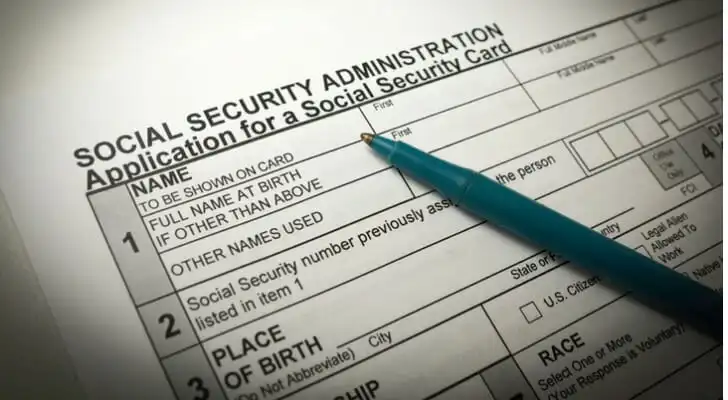
To get an original or replacement Social Security number and card for a U.S.-born citizen, you must complete Form SS-5 and submit it to the Social Security Administration with the following supporting documentation:
- Original birth certificate (Official hospital record of birth if no birth certificate)
- U.S. passport
- Official ID (State-issued ID cards, military ID cards, school ID cards or health insurance ID cards)
If you are applying for a child, acceptable forms of ID include:
- Doctor, clinic or hospital record
- Official birth certificate
- Adoption decree
- School identification card/record
- Daycare records
- Religious records
You must also provide proof of your own identity.
There is no fee to get a new or replacement Social Security card. You can apply in person at your local Social Security office or online if you are at least 18 years old, have a U.S. address and have a state-issued ID.
Online applications are available through your My Social Security account.
Wondering what your Social Security benefit could look like? Use SmartAsset’s Social Security Calculator to estimate your benefits and see how they could fit into your retirement income.
How to Protect Your Social Security Number
Your Social Security number is directly linked to your financial records, government benefits and tax history, making it a prime target for identity theft. If someone gains access to your SSN, they may be able to open credit accounts, file fraudulent tax returns or claim government benefits in your name.
Recovering from this type of fraud can be time-consuming and financially damaging. This is especially true if it affects your credit report or delays access to legitimate benefits.
To reduce risk, federal agencies like the SSA and IRS recommend that you limit how and when you share your SSN:
- Avoid carrying your Social Security card in your wallet.
- Provide your number only when legally required, such as on tax documents or official government forms. For other requests, ask if an alternative form of identification is acceptable.
- Stay alert to scams, especially emails, texts or phone calls claiming to be from government agencies asking for your SSN.
- Shred any physical documents with your SSN before disposal.
- Check your Social Security earnings record each year to confirm that your work history is accurate. This will alert you if someone is using your SSN to report wages or employment under your name.
Taking these basic precautions will help maintain the security of your personal information and prevent long-term financial consequences.
What to Do If Your Social Security Number Is Stolen
If you find out that your Social Security number has been stolen or misused, acting quickly can limit the damage and speed up recovery.
File an FTC Report
Start by filing a report with the Federal Trade Commission (FTC) at IdentityTheft.gov. This creates an official record and generates a personalized recovery plan based on your specific situation. The report may also come in handy when disputing unauthorized accounts with creditors or financial institutions.
Contact Credit Bureaus
Next, reach out to the three major credit bureaus.
Here, you have two options:
- Credit lock: This restricts access to your credit file so no one can open new accounts in your name.
- Credit freeze: This signals to lenders that they should take extra care to verify your identity before approving any new credit.
You can set these up individually with each bureau at no cost.
Notify the SSA
Contact the Social Security Administration directly to report the suspected misuse.
Through your online account at SSA.gov, you can review your earnings record to check whether wages or employment have been reported under your number without your knowledge. Catching unauthorized entries early matters because errors in that record can affect your benefit calculations down the road.
File Taxes Early
File your federal tax return as early in the season as possible.
Tax fraud involving stolen Social Security numbers is common, but submitting your return early removes a significant opportunity for misuse. If you find that a return has already been filed fraudulently, the IRS has a dedicated process for resolving it.
Some creditors and agencies may ask for a police report as part of resolving disputed accounts. Filing one creates a formal record that can support your case throughout the recovery process.
After taking the initial steps, continue checking your credit reports in the weeks and months that follow. Fraudulent activity does not always appear right away, and catching new unauthorized accounts early makes them easier to resolve.
Bottom Line
Your Social Security number is a unique nine-digit number from the Social Security Administration. It plays an important part in your everyday life when it comes to things like getting a job, credit approvals and retirement benefits. Knowing your Social Security number – and how to keep it safe – can make all the difference when managing your finances in the short- and long-term.
Tips for Investing
- Consider talking to your financial advisor about Social Security benefits and where they fit into your retirement plans. Finding a financial advisor doesn’t have to be hard. SmartAsset’s free tool matches you with vetted financial advisors who serve your area, and you can have a free introductory call with your advisor matches to decide which one you feel is right for you. If you’re ready to find an advisor who can help you achieve your financial goals, get started now.
- Social Security planning is important, especially if you’re married or you’re unsure when you should begin taking Social Security benefits. Married couples have different options for maximizing their benefits, based on each spouse’s earnings history. While taking benefits early could provide much-needed income for retirement, you could reap a larger benefit by waiting longer to file for Social Security.
Photo credit: ©iStock.com/DNY59, ©iStock.com/DNY59, ©iStock.com/Enigmangel