 Written by
  Edited by
  Edited by
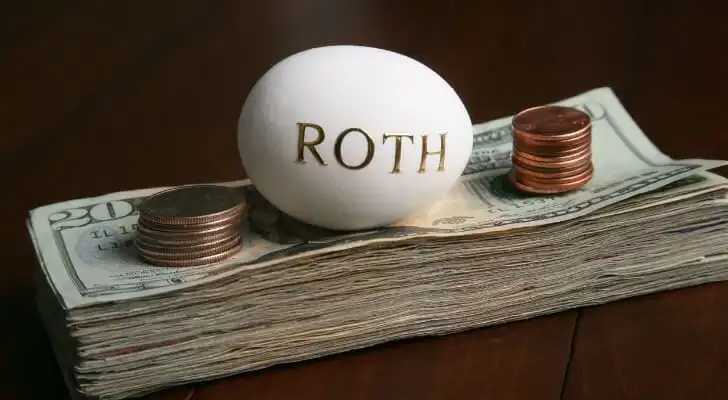
A Roth IRA can be a useful tool for accumulating the funds needed to pay for a comfortable lifestyle in retirement. That’s because it permits growth without owing taxes on investment gains, and also allows savers to withdraw funds in retirement without paying taxes on their withdrawals. Three things generate Roth IRA growth. Those are your contributions, earnings from interest and dividends on investments and increases in the value of assets purchased and held in the Roth IRA.
If you want to build out your retirement plan, a financial advisor can help you use a Roth IRA and other retirement accounts to boost your nest egg.
Roth IRA Basics
A Roth IRA is a retirement account you fund with after-tax dollars. Later on, you can take money from the account without owing taxes as long as you have had the account for at least five years and are past age 59 ½.
There is an annual maximum on Roth IRA contributions. For 2026, the limit is $7,500 for retirement savers younger than 50. Roth IRAs are also subject to income limitations that mean higher-earning retirement savers can’t contribute to them at all. For 2026, individuals can make a full Roth contribution if their income is less than $153,000 and a partial contribution if it’s between $153,000 and $168,000. Joint filers can make a full contribution if their income is less than $242,000 and a partial contribution if it’s between $242,000 and $252,000.
Roth IRAs are free of the traditional IRA’s mandate to take required minimum distributions (RMDs) once you reach 73 (75 in 2033). Because RMDs don’t apply to Roth IRAs, account owners are free to leave their money in to grow tax-free for a longer period of time.
How a Roth IRA Grows

A Roth IRA’s return doesn’t come from the account itself. These accounts are just tax-advantaged places to keep funds. The growth is generated by investments made with funds in the account. The rate of growth depends on where the funds are invested, as well as other factors including fees.
Growth in a Roth IRA comes from three sources: contributions, interest and dividends and price appreciation. Here is more on these three factors:
Contributions
Your contributions will drive the growth of your IRA in the early years. For example, if you open a Roth IRA at age 35 in 2026 with an initial $5,000 deposit and contribute $7,500 annually for the next 14 years (growing 7% annually), your account would be worth nearly $183,000 by 2040. Approximately $110,000 would come from your contributions.
Interest and Dividends
Over time, growth from interest and dividends plays a bigger role in building your Roth IRA’s value.
By 2056, when you turn 65 and retire, your Roth IRA could be worth $693,000, with over $470,000 coming from investment earnings (assuming you contributed $7,500 each year). Only about a third of that total would come from your contributions.
Compound interest drives this growth. As earnings stay invested, they generate even more interest, allowing your savings to grow faster. Over time, compounding becomes the main factor increasing the value of your Roth IRA.
Appreciation
Price appreciation is another source of potential growth in your Roth IRA. Bank certificates of deposit, interest-earning bonds, dividend-paying stocks and other income-generating investments such as dividend funds are part of many Roth IRA portfolios. But other common Roth IRA investments, such as common stocks, do not pay dividends or interest.
Gains to your Roth IRA from these investments result from price appreciation or capital appreciation. You buy them at one price and sell them later for a higher price. Over long periods of time, such as a few decades, investments in stocks have historically outperformed investments in bonds and other income investments.
Price appreciation from stock investments represents an important part of the overall growth that most Roth IRAs experience. Because stock market valuations fluctuate less predictably than interest returns, they are more difficult to accurately predict, but they can still be expected to be important for your Roth IRA’s growth.
Bottom Line

Growth of a Roth IRA comes from three sources: contributions, interest and dividends and price appreciation of the assets held in the account. Of the three, contributions are most important early on, interest and dividends usually are more important later on, and price appreciation is historically the biggest factor in long-term growth, although this factor is harder to reliably quantify in advance.
Tips for Retirement Savings
- You can turn to a financial advisor for help devising a retirement saving strategy that uses Roth IRAs and other tools. SmartAsset’s free tool matches you wit vetted financial advisors in your area, and you can interview your advisor matches at no cost to decide which one is right for you. If you’re ready to find an advisor who can help you achieve your financial goals, get started now.
- Every individual’s retirement plan is different, but you can learn about the likely outcome of your own specific approach to saving and investing for retirement by using SmartAsset’s Investment Return and Growth Calculator. Just type in three bits of information: the amount of money you have right now, the amount and frequency of additional contributions, the anticipated rate of return and the number of years you’ll let your investment growth. The calculator will tell you how much your savings will amount to at the end of that time.
Photo credit: ©iStock.com/jygallery, ©iStock.com/zamrznutitonovi, ©iStock.com/Eleganza