 Written by

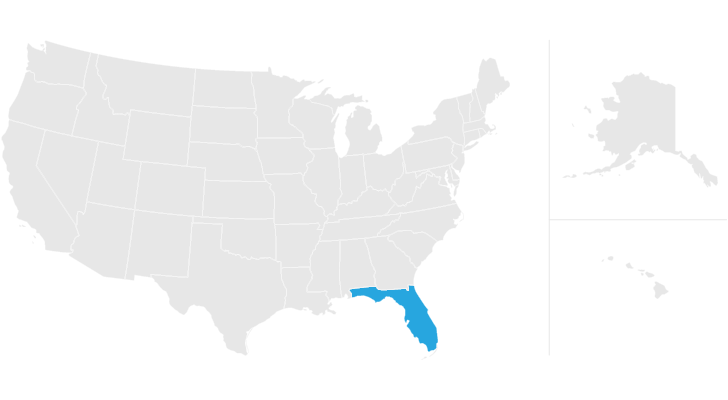
In Florida, there are no state taxes related to inheritance and the estates of those who have died. Below, you’ll find details on how the state handles its residents’ estates both with and without a will present. Remember, heirs only receive what’s left of an estate after the payment of the decedent’s debts.
A financial advisor can help you plan and manage your estate or inheritance. Speak with an advisor today.
Does Florida Have an Inheritance Tax or Estate Tax?
There are no inheritance taxes or estate taxes under Florida law. This applies to the estates of any decedents who have passed away after December 31, 2004. If an individual’s death occurred prior to that date, then it is necessary to file an estate tax return.
Just because Florida lacks an estate or inheritance tax doesn’t mean there aren’t other tax filings an estate must complete. You will need to file the following:
- Final individual state and federal income tax returns. Due by tax day of the year following the individual’s death.
- Federal estate tax return. Due nine months after the individual’s death. Note that only individual estates that exceed a gross asset and prior taxable gift value of $15 million in 2026 must file this. 1 It’s possible to get an automatic six-month extension if you request it before the aforementioned nine-month period ends.
- Federal estate/trust income tax return. Due by tax day of the year following the individual’s death.
Note the federal government and the IRS do not immediately consider estates as distinct entities. As such, you must apply for an employer identification number (EIN). This ID number will represent the estate on tax returns. You can apply for an EIN online, or submit by fax or by mail.
Dying With a Will in Florida
For your will to be valid under Florida inheritance laws, you must personally sign it in front of no fewer than two witnesses. If an injury, illness or other physical impairment prohibits you from signing yourself, you can direct another individual to sign it in your presence. The witnesses also must sign the will.
A valid will must name an executor to handle the disbursement of all property listed as part of the estate. Additionally, it must clearly label the recipients for each piece of property.
Once the decedent has died, the individual with possession of the valid will must file it with the local court no later than 10 days after the death. From there, one of three situations will play out:
- Disposition without administration. This process uses the value of a decedent’s estate to repay the individual who covered their final expenses, such as a funeral. However, it can only be filed if the deceased owned no land or real estate and their leftover assets either don’t cover any final expenses or cannot be used to pay off the estate’s formal debts. In this case, there is no intervention from the court, though you still must file your request.
- Summary administration. This is the next possibility. You’ll begin this process by filing a “Petition for Summary Administration” stating that you’d like the estate to be given to the decedent’s heirs via the executor listed in the will. This option is only eligible if the probate value of the estate is $75,000 or less, or the death happened more than two years ago. 2
- Formal administration. This is the lengthiest process and overall last resort. It opens with the court deciding if the will is valid according to Florida law. If so, the executor named in the will is permitted to handle the deceased’s wishes as they’re listed. Even then, however, the court will look to ensure the correct disbursement of the will.
Dying Without a Will in Florida
If a Florida resident dies without a valid will, their estate is left up to the mercy of intestate succession laws. These laws determine who has legal right to the contents of the estate. The term “intestate” refers either to an individual who dies without a will or without a valid will. Even for those with a valid will, the intestate process may be necessary for certain property if the will doesn’t clearly and completely spell out who is meant to receive it.
Florida will afford all intestate heirs equal share of the estate’s property, a style legally known as “per stirpes.” For example, if your four biological and/or adopted children were deemed the sole legal heirs to your property, each of them would receive 25%.
Although the court ultimately determines the division of property among a decedent’s relatives, it doesn’t actually disburse the estate. Instead, it will appoint either the surviving spouse, an individual elected by the majority of heirs, the most-closely related/best-qualified heir or anyone deemed capable enough to handle the job.
Spouses in Florida Inheritance Law
The surviving spouse of a decedent possesses the strongest rights to an intestate estate under Florida inheritance laws. In fact, they will receive your entire estate if you have no surviving children or if your only surviving children were with your spouse. But if not all of your surviving children were with your spouse or you each have children with other people, your spouse will only receive half of the estate. In turn, the other half goes to your children.
Florida affords widows and widowers currently going through a probate case some rights to help them get through the sometimes long process. They will receive access to their late spouse’s vehicle if they require transportation. Additionally, they’ll receive a family allowance of up to $18,000 to help cover living costs.
As an elective share state, any surviving spouses in Florida who are disinherited from a decedent’s will can choose to take part of the estate. However, they cannot take any non-probate assets, like cash and investment accounts.
Divorces in Florida Inheritance Law
Under Florida intestate law, a spouse will lose all inheritance rights when they divorce the decedent. But if the decedent passes away during the divorce process or after the couple becomes separated, the spouse will maintain inheritance rights.
Children in Florida Inheritance Law
The only conditions under which a decedent’s children will receive their parent’s full intestate estate is if the parent dies without a surviving spouse. If both you and your spouse are their parents, the children will receive nothing. But they will get half of your estate if your surviving children expand beyond you and your surviving spouse’s relationship.
Intestate Succession: Spouses & Children
| Inheritance Situation | Who Inherits Your Property |
|---|---|
| If spouse, but no children | – Entire estate to spouse |
| If spouse and children only from relationship with that spouse | – Entire estate to spouse |
| If spouse and children both from relationship with spouse and another person | -1/2 of estate to spouse -1/2 of estate to all children |
| If spouse and children from relationship with spouse, and spouse has children with another person | – 1/2 of estate to spouse – 1/2 of estate to only your children |
| If children, but no spouse | – Entire estate to children |
Under Florida intestate succession laws, biological children hold the strongest inheritance rights of any type of child. This applies regardless of whether the children were born within a marriage or not. All that matters is that paternity is provable, either via science or your own recognition prior to your death. Although grandchildren are also directly related to you, they are not given automatic inheritance power unless their parent, or your child, has died.
Adopted children have the same inheritance rights as biological children, according to Florida inheritance laws. The same benefits apply to children who are conceived prior to your death but born following it.
There are three types of children who won’t receive inheritance rights in Florida: foster children, biological children put up for adoption and stepchildren. Because the Florida state government doesn’t see children within these groups as legally “yours,” they do not receive anything unless you have a valid will listing them as an heir.
Unmarried Individuals Without Children in Florida Inheritance Laws
The intestate inheritance process of Florida becomes a little more convoluted the further away from your closest relatives you get. Intestate succession dictates the estate should then go as follows, according to Florida inheritance laws:
Intestate Succession: Extended Family
| Inheritance Situation | Who Inherits Your Property |
|---|---|
| If parents, but no spouse or children | Entire estate to parents |
| If no parents | Entire estate to siblings |
| If no siblings | Estate split evenly between nieces and nephews |
| If no nieces and nephews | Estate split evenly between paternal/maternal grandparents |
| If no grandparents | Estate split evenly between paternal/maternal aunts and uncles |
| If no aunts and uncles | Estate split evenly between paternal/maternal cousins |
| If no cousins | Entire estate to the family of a past spouse, if the ex-spouse is deceased |
In the event that Florida is unable to locate and track down any of your remaining relatives to bestow your estate upon, it will escheat your property. This essentially means the state takes complete control of it. If you have a very small or nonexistent family, you can easily avoid this by creating a will that names specific heirs.
Non-Probate Florida Inheritances
There are specific types of accounts and property of the deceased that won’t be subject to the probate process, or any related processes for that matter. This is because at the time that ownership is granted under the following circumstances, a beneficiary or joint owner has already been named:
- Retirement accounts, payable-on-death bank accounts, life insurance policies, transfer-on-death accounts
- Living trusts
- Jointly-owned bank accounts or homes
For inherited retirement accounts, heirs must pay income tax on the assets they withdraw.
Other Situations in Florida Inheritance Laws

Half-blood members of your family hold literally half the inheritance rights of full-blood members in the eyes of Florida inheritance laws. So, if intestate succession dictates that your full- and half-blood relatives must split ownership, your half-relatives only get half of what their full-blood counterparts receive. But if all that remains are half-blood relatives, they receive full inheritances.
It doesn’t matter if an heir to your intestate estate isn’t a U.S. citizen or is living illegally in the U.S. They still remain a valid heir to the estate, regardless of their standing with the federal government.
Should a decedent die via murder, the individual convicted for said murder will lose all rights to inheritance, per Florida inheritance laws. A probate court also holds the ability to void all inheritance rights of even a suspected murderer in the event the killing is deemed unlawful based on existing criminal evidence.
How a Financial Advisor Can Help With Living Trust Planning in Florida
The financial choices behind the legal paperwork for a living trust are where an advisor’s guidance becomes useful. They can work in tandem with an estate planning attorney to ensure the resulting trust fully aligns with your wishes.
Evaluating Whether a Living Trust Is Worth the Cost in Florida
- What an advisor can do: Florida has its own probate process. For some estates, a will paired with Florida’s summary administration procedure may accomplish the same goal at lower cost. An advisor can calculate whether the upfront and ongoing costs of a living trust actually make sense given your estate’s size, or whether simpler alternatives would reach the same result for less money.
- Example: A homeowner in Orlando holds a relatively modest estate valued at $400,000 with no minor children. An advisor compares the cost of establishing a trust against Florida’s summary administration process. They conclude that a will alone would likely produce the same outcome at a fraction of the cost.
Planning Around Retirement Accounts and Beneficiary Designations
- What an advisor can do: An advisor help you assess whether naming the trust as beneficiary on certain accounts like a 401(k), which you cannot transfer directly into a trust, fits your family’s circumstances and tax situation. The other option is to name individual heirs directly.
- Example: A retiree in Tampa wants to leave a $300,000 401(k) to two adult children but worries one child may handle a lump sum poorly. An advisor structures the trust as the account beneficiary with specific distribution conditions. They clarify the tax consequences of routing retirement assets through the trust instead of naming the children outright.
Coordinating the Trust With Florida’s Inheritance Tax Rules
- What an advisor can do: Florida has no state inheritance tax, but an advisor can review beneficiary designations and trust structure to confirm assets pass as efficiently as possible. They can also flag any federal tax considerations that apply given the size of the estate.
- Example: A grantor in Jacksonville plans to leave part of their estate to a close friend. An advisor confirms that while Florida imposes no inheritance tax, the federal estate tax threshold and the friend’s lack of stepped-up basis on inherited assets are worth considering when deciding how to structure the gift.
Projecting Estate Growth for Federal Estate Tax Exposure
- What an advisor can do: Since Florida imposes no state estate tax but federal rules kick in above $15 million in 2026, an advisor can track how your assets are likely to grow. They can then flag if you are nearing that federal threshold, even though your state has no estate tax of its own.
- Example: A business owner in Miami currently has an $11 million estate. An advisor projects that ongoing business growth and rising property values could carry the estate past the federal exemption within a few years. This realization prompts an earlier look at lifetime gifting or trust strategies to address that future federal liability.
Funding the Trust Correctly
- What an advisor can do: An advisor can help inventory your financial accounts and coordinate the actual transfer of assets into the trust once it exists. This is a crucial step, as a trust you fail to fund delivers none of the intended protections.
- Example: A grantor in Sarasota sets up a living trust but never retitles a brokerage account or updates beneficiary forms. An advisor audits the full asset list, pinpoints which accounts still need retitling and guides the grantor through completing the funding process. This ensures the trust actually works as planned.
Tips for Planning Your Estate
- A financial advisor can help you build an estate or inheritance plan. SmartAsset’s free tool matches you with financial advisors who serve your area. Then, you can interview your advisor matches at no cost to decide which one is right for you. If you’re ready to find an advisor who can help you achieve your financial goals, get started now.
- If you’re planning your estate and the idea of probate seems like a hassle, you may want to consider a living trust. Once you pass away, your successor trustee will be able to transfer the contents of your trust directly to your beneficiaries. The trustee won’t have to seek approval from the court.
Photo credit: ©iStock.com/artisteer, ©iStock.com/aphotostory
Article Sources
All articles are reviewed and updated by SmartAsset’s fact-checkers for accuracy. Visit our Editorial Policy for more details on our overall journalistic standards.
- “Frequently Asked Questions on Estate Taxes | Internal Revenue Service.” Home, https://www.irs.gov/businesses/small-businesses-self-employed/frequently-asked-questions-on-estate-taxes. Accessed July 10, 2026.
- Statutes & Constitution :View Statutes : Online Sunshine, https://www.leg.state.fl.us/Statutes/index.cfm?App_mode=Display_Statute&URL=0700-0799. Accessed July 10, 2026.