 Edited by

Bonds are generally less volatile than stocks and give bondholders a contractual claim to interest and principal, which makes them feel safer day to day. But safety has more than one meaning. A bond can lose real value to inflation for years without the issuer ever missing a payment, while a diversified stock portfolio that drops sharply can recover and compound far beyond what a bond would have returned. Whether bonds are actually safer than stocks depends on what risk you are trying to avoid and how long you have to invest.
A financial advisor can help you weigh the trade-offs between stocks and bonds and build an allocation suited to your time horizon, income needs and tolerance for short-term swings.
What It Means for an Investment to Be “Safe”
Before comparing bonds and stocks, it helps to recognize that “safety” is not a single quality. An investment can be safe along one dimension and risky along another. The version of safety that matters most depends on your situation.
- Price volatility: This refers to how much an investment’s value swings in the short term. Stocks are far more volatile than high-quality bonds, which is the basis for the common belief that bonds are safer.
- Default (credit) risk: This is the chance that the issuer fails to pay interest or principal. U.S. Treasury’s carry very low default risk; corporate and high-yield bonds carry more.
- Inflation and purchasing-power risk: This is the danger that rising prices erode what your money can actually buy. It’s in this type of risk that bonds, especially fixed-rate ones, are most exposed.
- Interest rate risk: This is the chance that rising rates push down the market value of existing bonds. Longer-maturity bonds are generally hit hardest.
It’s important to understand that a bond can lose significant value without the issuer ever defaulting, while a stock portfolio can recover losses that a short-term bond cannot. The relevant definition of safety also shifts with time horizon. What protects a retiree who is drawing down assets may actively hurt a long-term investor still building wealth.
How Bonds and Stocks Differ in Structure, Returns and Risk
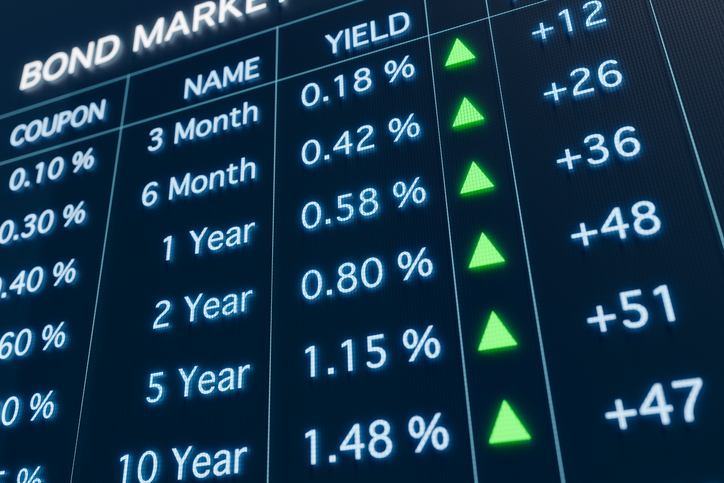
Stocks and bonds sit on opposite sides of a company’s capital structure, and that difference drives everything about their risk and return. A stock represents ownership with no promised return. A bond, in contrast, makes you a creditor with a contractual claim to scheduled interest and the return of principal at maturity.
- Ownership vs. lending: Stockholders own a slice of the business and share in its upside (and downside) without guarantees. Bondholders are lenders who get paid before shareholders if the company runs into trouble.
- Long-run returns: Since 1926, large-cap U.S. stocks have returned roughly 10% annually, compared with about 5% to 6% for long-term government bonds. 1 Past performance does not guarantee future results, but the long-run gap has been substantial.
- Interest rate risk (bonds): When rates rise, the prices of existing bonds fall, and longer-duration bonds fall the most. This is a real risk even when default is not a concern.
- Market risk (stocks): Stocks can drop sharply and quickly during downturns. But historically, they have recovered and compounded over long holding periods.
- Credit risk (bonds): Corporate and especially high-yield (“junk”) bonds carry the possibility that the issuer defaults on interest or principal. Note that this is a risk that largely does not apply to U.S. Treasury’s.
Stocks vs. Bonds at a Glance
| Feature | Stocks | Bonds |
|---|---|---|
| Your role | Owner (equity) | Lender (creditor) |
| Promised return | None | Contractual interest + principal |
| Long-run return (since 1926) | ~10% annually (large-cap) | ~5%–6% (long-term govt.) |
| Main risks | Market/volatility risk | Interest rate + credit risk |
| Short-term volatility | High | Lower (varies with duration) |
When Bonds Are Safer Than Stocks
For certain investors and time frames, bonds genuinely are the safer choice. Their lower volatility and predictable cash flows make them especially valuable when you cannot afford a large, sudden drop in value. Here are some specific scenarios where bonds may be the safer choice:
- Short time horizons: If you will need the money within roughly one to three years, bonds and cash equivalents reduce the risk of being forced to sell stocks during a downturn at a loss.
- In or near retirement: Investors who depend on their portfolio for income benefit from the predictable interest payments bonds provide, smoothing cash flow without relying on selling shares into a weak market.
- Amid equity stress: In many recessions and market sell-offs, high-quality bonds such as U.S. Treasurys have acted as a stabilizing counterweight, holding or gaining value while stocks fell.
For most of the two decades through 2020, high-quality bonds were negatively correlated with stocks, making them an effective hedge. 2 That relationship is not permanent, though. In 2021–2022, a sharp inflation surge pushed stocks and bonds down together for the first time in decades, and the stock-bond correlation turned positive before easing again more recently.
That said, bonds still tend to dampen overall portfolio volatility. They just are not a guaranteed offset in every downturn, especially when inflation is the driving force.
Comparing bonds with other investments? SmartAsset’s investment calculator can help you estimate how different rates of return could affect your portfolio over time.
When Bonds Are Not Safer Than Stocks
Over long horizons, the conventional wisdom can flip. The very features that make bonds feel safe, namely, fixed payments and lower volatility, leave them exposed to risks that quietly compound over time. Here are some instances when they might not actually be the safer bet over stocks:
- Purchasing-power risk over decades: Bonds have consistently failed to keep pace with stocks on a real, after-inflation basis over long periods. Holding mostly bonds for 20 or 30 years can mean meaningfully diminish wealth, even though the ride felt smoother.
- Rising inflation: When inflation climbs, bond prices fall and real returns can turn negative. Stocks in companies with pricing power may hold up better by passing higher costs to customers.
- Rate-driven volatility: In rising-rate environments, long-duration bonds can be nearly as volatile as equities, and unlike stocks, they offer no participation in economic growth. The 2022 bond drawdown was a vivid example.
- The hidden risk for young investors: Investors with decades before they need the money may take on more long-term risk by avoiding stocks than by holding them. That’s because they lock in lower expected returns and surrender growth they have time to capture.
For a long-term investor, the bigger danger is often not a temporary stock decline but a permanent shortfall in purchasing power. Measured that way, an all-bond portfolio can be the riskier choice.
How to Use Both in a Portfolio
For most people, the question is not bonds or stocks, but rather how much of each. Combining the two types of investments lets you capture the growth potential of equities while using bonds to soften the swings. Here are some tips for incorporating both:
- Shift the mix with your horizon: As your time horizon shortens and income needs grow, a larger bond allocation reduces the risk of a poorly timed downturn.
- Use established frameworks as a starting point: Approaches like a 60/40 stock/bond split or age-based “glide paths” use bonds to dampen volatility without abandoning equity growth. Keep in mind, however, that this a structure, not a one-size-fits-all rule.
- Diversify across both: Because stocks and high-quality bonds often respond differently to the same conditions, holding both lowers the chance that a single event devastates the whole portfolio.
- Match holdings to the risk you face: If inflation is a top concern, pairing bonds with inflation-sensitive assets can matter more than simply adding more stocks.
Beyond these tactics, a financial advisor can also help determine the right balance based on your time horizon, income needs, tax situation and tolerance for short-term volatility. They can then revisit that balance with you as those factors evolve.
Bottom Line

Are bonds safer than stocks? In the short run and for income-dependent investors, usually yes, bonds are less volatile and provide more predictable cash flow. Over long horizons, the answer often reverses. That’s because bonds’ fixed payments lose ground to inflation and miss out on the growth that has made stocks the stronger performer since 1926. Keep in mind, however, that neither asset class is universally “safe.” The smarter framing is to match each investment type to the specific risk you are trying to manage, then blend them into an allocation that fits your time horizon and goals.
Tips for Portfolio Mangement
- A financial advisor can manage your portfolio to meet your long-term financial goals, and they can automate the process for you. Finding a financial advisor doesn’t have to be hard. SmartAsset’s free tool matches you with vetted financial advisors who serve your area, and you can have a free introductory call with your advisor matches to decide which one you feel is right for you. If you’re ready to find an advisor who can help you achieve your financial goals, get started now.
- Consider using an investment calculator to help you determine how a specific investment might grow over time.
Photo credit: ©iStock.com/Drazen Zigic, ©iStock.com/Torsten Asmus, ©iStock.com/Galeanu Mihai
Article Sources
All articles are reviewed and updated by SmartAsset’s fact-checkers for accuracy. Visit our Editorial Policy for more details on our overall journalistic standards.
- “Stocks, Bonds, Bills, and Inflation 1926–2025.” New York Life Investment Management, https://www.nylim.com/assets/documents/education/investing-essentials-growthofadollar.pdf. Accessed June 15, 2026.
- Adrian, Tobias. “Stock-Bond Diversification Offers Less Protection From Market Selloffs.” IMF, Feb. 18, 2026, https://www.imf.org/en/blogs/articles/2026/02/18/stock-bond-diversification-offers-less-protection-from-market-selloffs.